Shop notes: Back to our roots
Hey everyone,
The last time you heard from me, I was telling you about Cube Computer. Since then, we’ve realized this is not the product we should build. We’re now working on something much closer to our hearts, and much truer to our origins.
The legal name of our company is Collaborators Inc. When Paul and I founded it, our intention was to reinvent creative collaboration for the agentic era.
We learned quickly that our initial hypotheses about better interfaces for building with agents did not resonate with users. However, we did come across a real and recurrent problem: the need for a better place to run coding agents than a personal laptop.
We knew that a collaborative workspace would need a cloud computer component, so we decided to focus on this narrow problem as a tactical stepping stone to the larger product. Cube was born.
But the space of agentic sandboxes became incredibly crowded right as we launched. More importantly, we didn’t have a deep thesis on agent infra. Founder-product fit wasn’t there.
However: the two months we spent building and shipping Cube helped us learn a ton about the right shape for a collaborative agentic workspace.
Three weeks ago, we started working on an internal product that crystallized those insights: Collab. Over the past two weeks, Collab has gotten really good. Today I’m sharing a sneak peek of it with you. We plan to launch it as an invite-only beta in the coming days.
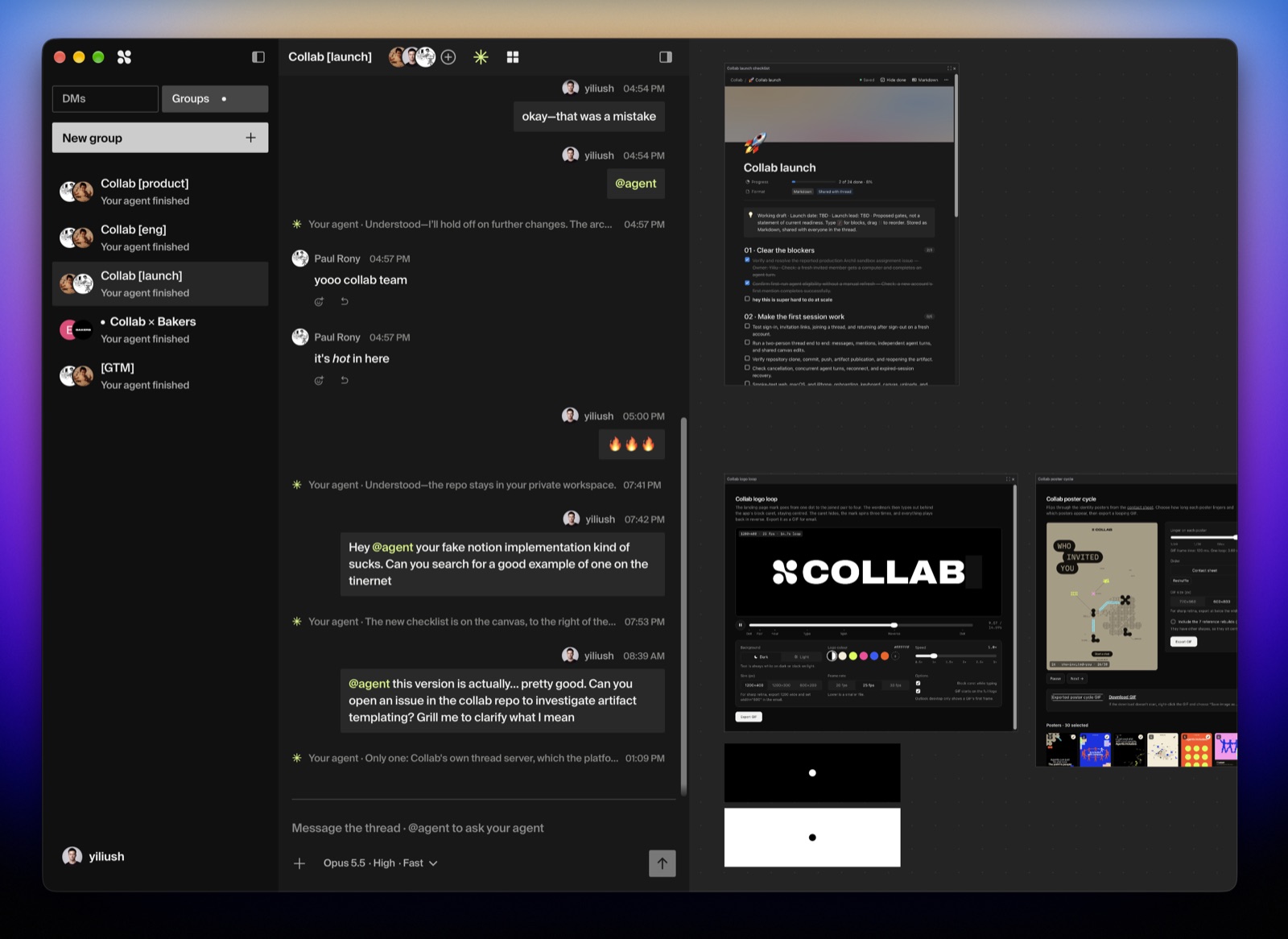
Collab looks a bit like many familiar things: an agent-native Slack where each thread comes with a Figma canvas, perhaps. But in truth, it’s something weirder. It’s a collaborative agentic workspace for a near future when the conventional borders of orgs, ownership, and workflows will have been dissolved by agents and reformed into stranger ones.
We’re pushing hard to get Collab ready for wider release. In the meantime, the Collab landing page is live, as is our core thesis: Why Collab. For your convenience, I’ve reproduced it in its entirety below.
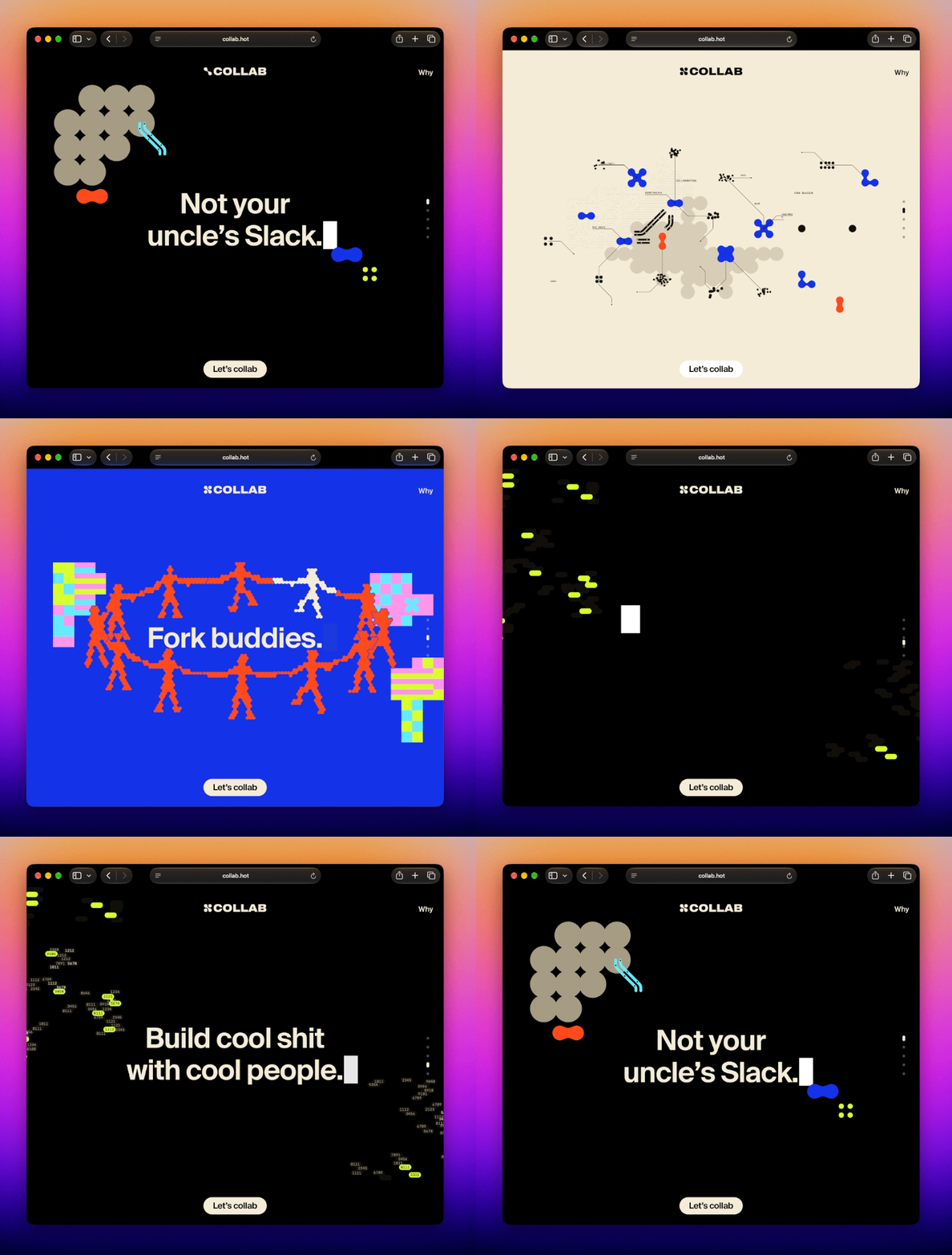
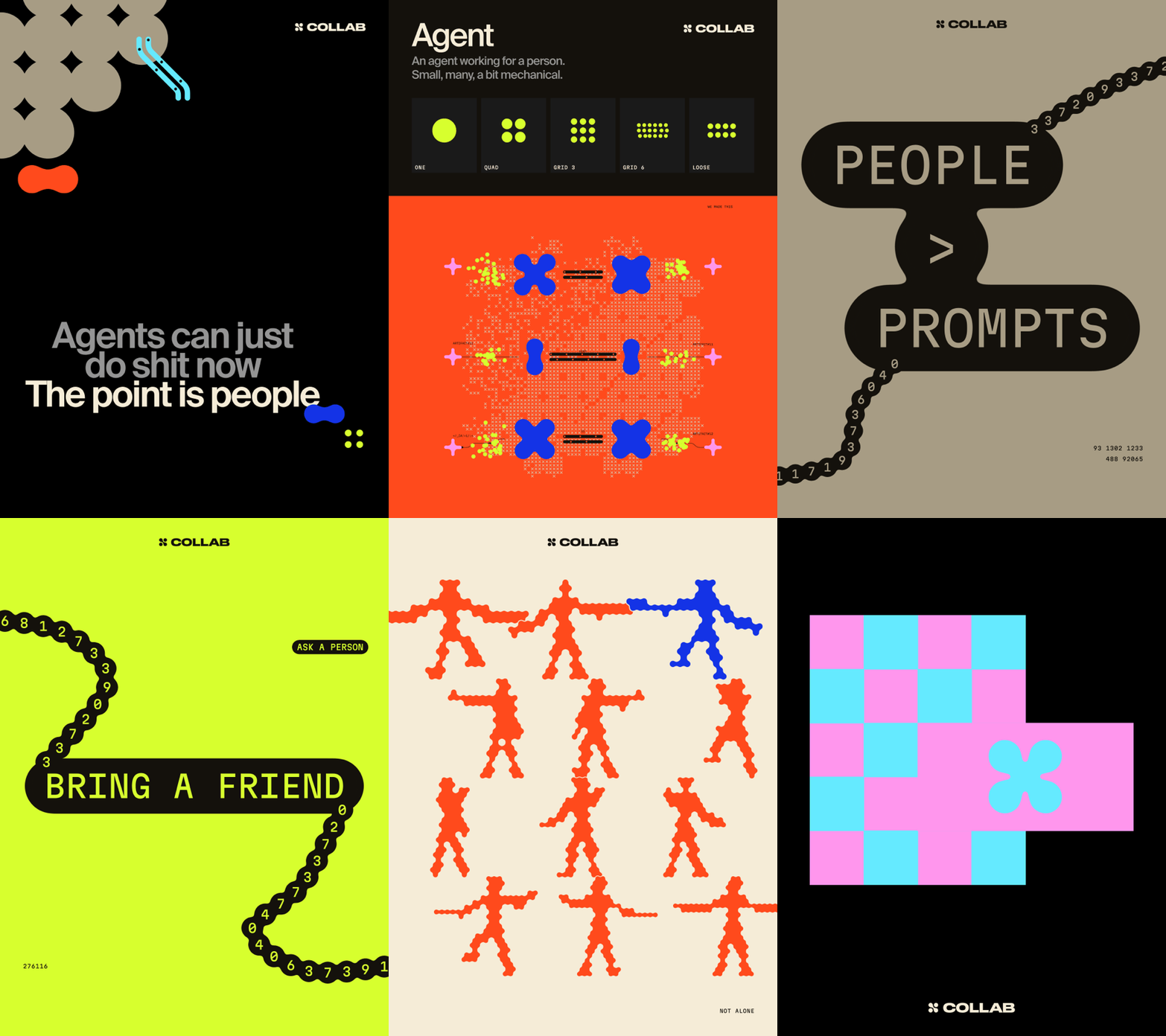
It’s been a blessing to work with the remarkable bakers.studio on developing a visual language for Collab that is undeniably alien, yet tantalizingly knowable.
You’re getting this email because I think of you as someone on this builder’s journey with us. Some of you have been reading these since the start of the year. Others of you are getting this for the first time.
The twists have been many, and no doubt there will be more to come. But I mean it when I say that I have not felt this strongly and deeply about a product for many years—if ever.
As always, thanks for reading. Drop me a note if you have thoughts.
Until the next one,
Yiliu
Why Collab
Collab is a collaborative agentic workspace.
From one angle it looks like a WhatsApp where each thread is a full workspace. From another angle it looks like a multiplayer Codex. From a third it looks like a Slack where you can work with anybody, not just folks in your org. And it hints at a new type of social network.
It’s all of those things, and not really any of them, because it’s a workspace for a future that’s very different from today. In that future, the conventional boundaries of orgs, authorship, ownership, and workflows will have been dissolved and redrawn into much stranger shapes.
That future is not very far away. In fact, it’s already here and unevenly distributed.
We’re building Collab because it unlocks enormous creative and productive potential that existing tools prevent. Potential to not only make new and better things, but for people to organize themselves into new and better economic structures.
All interactions on Collab happen in threads. Threads are conversations containing any number of other humans, and each is a complete workspace. Threads are where ideas are swapped, decisions are made, context accumulates, and artifacts are created and remixed. Each is a durable object under the hood, with version control.
Humans get a virtual machine on which their projects, context, and agents live. In each thread of which a human is a member, they have an agent. This agent runs on the human’s virtual machine, while also reading and writing to that thread.
Because you get a full cloud computer in Collab, your agents can do real work. They can set up the environment, clone repos, write code, test projects. Only you can invoke your agents, but all humans and agents in a thread can view all other agent sessions.
This is the core architecture of Collab. It’s still early, and things will change. But what won’t change is our belief in the need to fundamentally rethink what it means to make things, with others, in the agentic age.
If you share this belief, we’d love to have you on board.